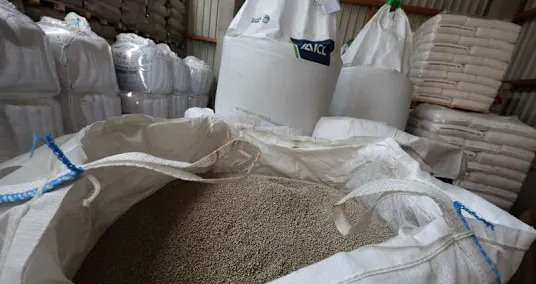

The war in Iran has resulted in a 30-40% spike in the cost of mineral fertilizer since the start of the year, threatening international food prices, according to German experts.
"World market prices for nitrogen fertilizer are increasingly approaching the peak levels we saw at the start of Russia's war against Ukraine [in February 2022]," said Philipp Spinne, managing director of the German Raiffeisen Association (DRV).
In Europe, however, consumers have not yet directly felt the effects because many farmers had already purchased their spring fertilizer before the Iran war began, the Bavarian Farmers' Association told dpa.
But should the war drag on, production costs in Germany and other countries are likely to rise, and with them, producer prices, it warned.
Four years ago, the threat to global food security feared by some experts did not materialize.
This was partly because Russia – a leading fertilizer producer – benefited from the invasion of its neighbour and actually increased its fertilizer exports.
The European Union has since gradually introduced tariff increases on Russian nitrogen fertilizers.
High energy prices are primarily driving the pricing spike, with gas prices accounting for up to 90% of the costs of ammonia and nitrogen production, said Germany's Agrar industry association.
Therefore, if gas becomes more expensive, fertilizer prices automatically rise. But if farmers use less fertilizer, crop yields suffer as a result.
LATEST POSTS




 They want better health care — so they're turning to crypto startups
- The most effective method to Beat Dental Tension and Guarantee Customary Exams
- Flying without a Real ID? That'll soon cost you $45, TSA says.
- Satellite data reveals a huge solar storm in 2024 shrank Earth's protective plasma shield
- NASA Perseverance rover sees megaripples on Mars | Space photo of the day for Jan. 7, 2026.
- Virtual Route d: A Survey of \Exploring On the web Stages\ Web Administration
- The risk of falling space junk hitting airplanes is on the rise, experts warn
- Want to read more in 2026? Here's how to revive your love of books
- This Week In Space podcast: Episode 204 — A New NASA